
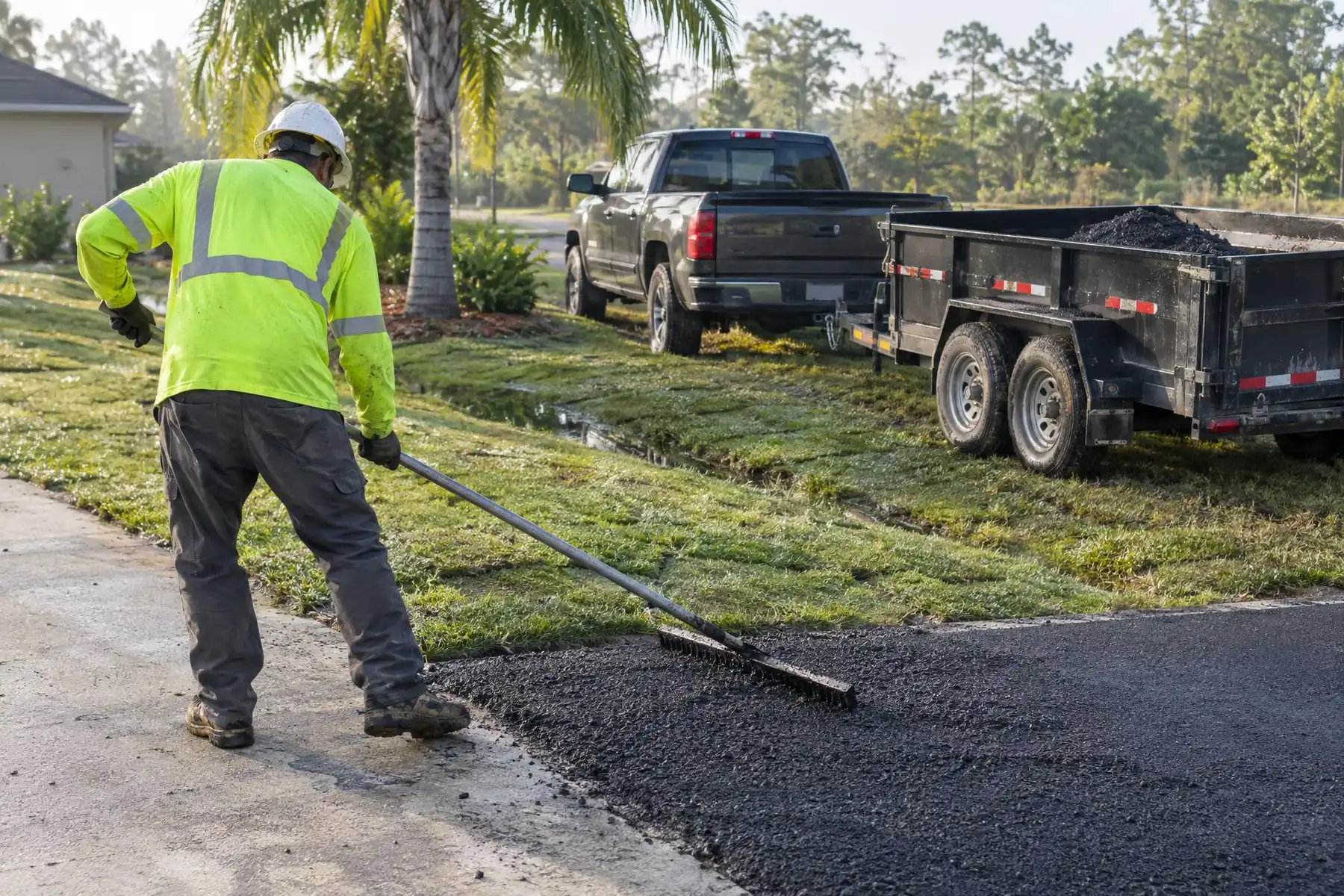
How Asphalt Paving Works: Why Deerfield Beach Pavement Cracks First
From the curb, pavement looks like one black sheet, but it is really layers. The usual home driveway holds 3 to 5 inches of asphalt on top of a bed of packed rock that is 4 to 8 inches deep, and the rock bears the weight. Once water softens that bed, each tire pass flexes the top layer until it splits. Whether it happens depends on drainage, base strength and rolling.
Deerfield Beach has two kinds of ground, and both cause trouble. Near the beach, NRCS maps Paola, St. Lucie and Palm Beach sands that drain freely but shift under load. Farther inland the survey shows Basinger and Pompano fine sands, where the water table climbs to about 6 inches in the wettest months, with Immokalee near 12 and Canaveral near 18. A base that wet loses strength, so wheel paths crack first and potholes come next.
Summer makes it worse. The rainy months deliver about 70% of annual rainfall, and Broward County’s normal is roughly 56 inches. Water enters through any open crack, and stone that stays soaked washes out from under the surface. One South Florida contractor warns that skipping a drainage fix means paying for the job twice. The top layer earns the praise, but the layers below do the work. Firm stone, drains that run and careful rolling keep a driveway smooth for years.